XI. Keep the Record Straight
- Dover Bay Property Owner
- Apr 30, 2019
- 6 min read
Updated: Jun 1
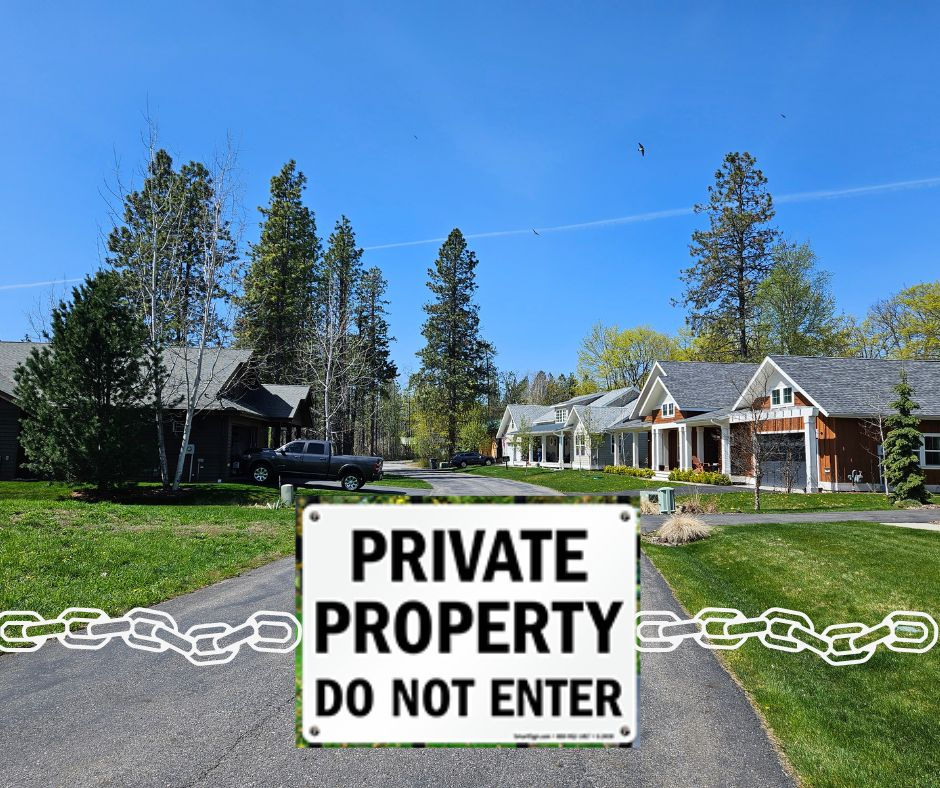
Property owners in Dover Bay want to prevent our neighborhoods from becoming siloed behind gates and chains like subdivisions. The current DBPOA board's misguided attempt to privatize certain neighborhoods and make them pay ( in addition to dues) for the care and maintenance of so-called "private" roads could divide up our beautiful Dover Bay.
We recently published VIII. Board Discredits Committee Members' Solutions. In that blog, we linked to a letter from Dover Bay's developer that was emailed to the Roads and Trails committee and DBPOA board members.
In that letter, Ralph Sletager shows clear support for the Roads and Trails Committee's recommendation that the DBPOA maintain all the roads in Dover Bay. In his letter he noted four CC&R Articles that provide Dover Bay property owners clear direction on the issue. The following review of our governing documents, plats, CC&Rs and our developer's letter is necessary to understand our property rights as owners.
Understanding Our Governing Documents
Correctly understanding the responsibility for the roads in the Dover Bay Planned Unit Development (PUD) requires accurately reviewing its plats and the defining legal information on them.
Each plat map has a cover page with Legal Reference Notes with a list of 5 notes. The first notation reads, “This PUD Plat is subject to covenants, conditions, and restrictions (CC&Rs) recorded contemporaneously in the records of Bonner County ."
CC&Rs are not suggestions for the governance of the PUD; they are the binding agreements we must all adhere to, HOA boards included. It's why the CC&Rs and Development Agreement were attached to your Title documents when you purchased property in Dover Bay. These documents are our Magna Carta as property owners.
The current DBPOA board president believes that certain roads in the PUD are privately-owned if the property owners' lot lines extend into the road (see Note below.) He also believes that the DBPOA Master Association has no responsibility to pay for any of the maintenance, care or management of those roads. See prior blogs which outline the specific streets.
Many property owners, as well as the developer, disagree with the board president and many of the DBPOA board.
The roads that have been targeted as “private” are noted on their PUD plats to have Easements, with the purpose of Ingress, Egress & Utilities. The current board president has stated publicly that these Easements are only for the use of those property/lot owners who reside on those roads. Yet, all of these roads have been used by the public, city residents, members of the association, and commercial traffic for the last 19 years.
It’s the CC&Rs that define the details on the plats, not the personal opinions or interpretations of a board president or board members.
NOTE: The property owners whose property lines extend into these easements in the PUD own the land under the road. While the street on the plats are identified as common areas and easements for ingress, egress and utilities.
Clarifying Easements
Article 12 of the CC&Rs provides clear language on Easements.
Article 12:1 “Access Easements. All owners of a lot have a perpetual easement for access, ingress and egress over the Common Area, including but not limited to the private streets, cul-de-sacs, trails, walkways, and waterways,”
Access Easements include “all owners.”
Access Easements are “over the Common Area.”
Paragraph 7 of Mr. Sletager’s recent letter to the board and committee states:
“Based on those differing conditions and others, I the Declarant of the DB PUD and pursuant to the DB PUD CC&Rs 4.1, 5.4.1, 3.8, 3.8.1 and 4.2 designated the roads in DB PUD as common area, with the exception of the Condo areas (Block) 4A & 4B, 6A and 10.”
Perhaps the Developer might know more about the roads than this current board?
Common Area Clarified
Article 3.8 & 3.8.1 in the CC&Rs define Common Area. (For brevity the entire CC&R article
will not be written out. Please review your own copy of the CC&Rs.)
Article 3.8 “Common Area shall mean all real property... for the common use, enjoyment and benefit of the entire Development, and each Owner therein... The Common Area may be established from time to time by the Declarant on any portion of the Property by describing it on a plat… The Common Area may include easement and/or license rights."
Article 3.8.1 “General Common Area shall mean and include, without limitation, all parcels that are designated as private streets or drives.., for the benefit and use of each and every Owner”.
Article 3.8 establishes that the common area use is for the enjoyment and benefit of the entire Development (PUD) and each owner therein. The common area may be established by the Declarant on any portion of the Property by describing it on a plat. And the Common Area may include easements and/or other license rights. Article 3.8.1 General Common Area includes all parcels that are designated as private streets or drives.
These two articles clearly contradict the opinion that the board president and the board hold. The roads they term private are Common Areas. Those roads are not limited to the use of the property/lot owners only, but are for the benefit and use of each and every Owner.

The president and board have attempted to use Article 3.8.2 "Limited Common Area" and erroneously apply it to their private road argument. Limited Common Areas are designated on the plat or on Supplemental documents. In the Article 3.8.2 these limited areas were established, “for the benefit and use of a group of Owners for a specific Area.” (Sub-associations within the PUD define the areas and the group of owners.)
Who Maintains Common Areas?
The next question is, who is responsible for the maintenance of these common area roads?
In his letter, Mr. Sletager referenced Article 5, entitled "Master Property Owners Association and Bylaws." Before we read this article, please note that none of these streets the board has deemed private are represented by a sub-association. See blog post II. 6B Attorney letter to the board.
For owners on these roads, there was either no Supplemental Declaration of CC&Rs recorded or no sub-association legally formed making the Master Association their "de-facto" managing board.
Article 5.4.1 is "Operation and Maintenance of the Common Area. Operate, and maintain, and otherwise manage, or provide for the operation, maintenance, and management of, the Common Area and other property of the Association, including the repair and replacement of property damaged or destroyed by casualty loss…”
This language is clear, the Master Association is to operate, maintain and otherwise manage or provide for the operation, maintenance and management of the Common Area and other property of the Association.
For 19 years this has been the established “course of practice,” which is an equitable application of the law. Why have we been assessed yearly dues by the Master Association if not for the Operation and Maintenance of these Common Areas? A portion of those dues has also been placed in a Reserve Fund for long-term common area maintenance, i.e. road replacement, (Article 7.2.1.)
Change in Common Areas Requires Your VOTE
The last two articles, 4.1 and 4.2 mentioned by Mr. Sletager in his letter need to be understood.
Article 4, is "General and Specific Restrictions"
Article 4.1 Designation of Common Area. "Declarant shall designate and reserve the Common Area, including General Common Area, Public Common Area, and/or Limited Common Area, in recorded Plats, deeds or other instruments and or as otherwise provided herein."
Article 4.2 Use of Common Area. Every owner shall have a right to use each parcel or part of the Common Area, which right shall be appurtenant to and shall pass with the title to every Lot, subject to the following.
Article 4.2 is expanded into sub-topics. Note, 4.2C states that the Declarant or Association has the right "to dedicate or transfer all or any part of the Common Area to any public agency, authority, or utility for such purposes and subject to such conditions as may be agreed to by the Declarant or the Association."
But, there is a RESTRICTION NOTED. “No dedication or transfer of said Common Area by the Association shall be effective unless an instrument agreeing to such dedication or transfer signed by Members representing at least sixty-seven (67%) of the voting rights in the Association Members has been recorded.”
Eskridge Place, Opal Court, Bergstrom, Slaveck, Spangle, Shannon Lane and Olson Drive are Common Area roads. In order to change them from that designation of Common Area to owner-controlled roads the board must provide an instrument with an agreement that has the voter approval of of 67% of the members.
This community and it’s direction is in your hands. Help us fight this board's convoluted interpretation of the CC&Rs. Their misguided direction would change our open, picturesque and inviting community into separate enclaves that gate themselves in... and keep neighbors out.
Please feel free to forward this on to your neighbors. They need to know.


